Showing posts with label food. Show all posts

Friday, October 22, 2010

Consumer, cow, milkman, roses, tulsi: one ecosystem

When I was little, we got our milk delivered straight from the buffalo sheds a few miles away (this was still Bombay, not somewhere in the countryside). The milkman had a bunch of buffaloes (or tended someone else's), and brought milk in large aluminum buckets, like the one on the left, and measured out as much as my mom wanted, into a large saucepan from the kitchen.

There was no packaging at all, no waste, and the milk had to be 100% fresh or else you'd know at once (it's warm here so fresh milk doesn't keep long unless you pasteurize by boiling). Sometimes the milkman would bring me a rose from the bush that grew by the shed. And when we wanted fertilizer for our house plants, he'd bring a dung cake (dry, not stinky). We'd pound it into a very coarse powder and scatter it in the tulsi pots. One cowpat is quite a lot of fertilizer!

It was such a wonderful, simple and environment-friendly system, and the producers (buffalo and milkman) were a more direct part of the lives of us consumers, not separate. The milk man died, the sheds got moved out, and we now get our milk and fertilizer in plastic packets, and the roses come from commercial farms with a massive carbon footprint (refrigerated trucks or planes). We have no idea who feeds the buffaloes or tends the flowers, what their names are (our milkman was Udit Narayan), whether they look healthy and are paid well, and how fresh or pure the milk truly is.

Saturday, May 1, 2010

Stephen Colbert on the hypocrisy of CSR

When you consume harmful products to help a cause, does your help outweigh the harm you're causing? Stephen lampoons corporate social responsibility, KFC, Campbell Soup, Coca-Cola, Ford, and Marlboro.


The Colbert ReportMon - Thurs 11:30pm / 10:30c
Tip/Wag - Scientists & KFC
www.colbertnation.com
Colbert Report Full EpisodesPolitical HumorFox News

Thursday, July 9, 2009

Mumbai's summer fruit - much more than mangoes

Last month, the mango season ended here in Mumbai. At that time, during a conversation about mangoes, the person I was chatting with grumbled, "You can't get good fruit in this country". These are the tropics, she has lived here all her life (she's no spring chicken) and she has plenty of money to buy any fruit she wants. But apparently third-world fruit does not count as fruit. I'm amazed, always, at the innumerable ways - many divorced from all reality - which we Indians can find to disparage ourselves.

I said in surprise that I ate not only mangoes but also canteloupe, chikoo, and other fruits for breakfast every morning. This rich and powerful woman, who wears lots of gold, diamonds and Louis Vuitton every day, then blamed her fruitwallah for not bringing biodiversity to her doorstep. He only brings mangoes, she complained. Well, why would any smart businessman sell her Rs. 30/kilo fruit when she unquestioningly and regularly buys fruit that costs Rs. 200/kilo and lacks the information to ask for other fruit in Mumbai's peak fruit season! Going to the market is one way to benefit from a market economy, but I guess the market street is a little rough on Rs. 8,000 designer shoes...

I love going to the market, which unfortunately I get to do only once a week. All through the summer, I photographed the fruit I was about to eat for breakfast. Here are those and a couple of other results. Enjoy!

Above: Curbside fruit seller at the corner of Tulsi Pipe and Mori roads, Mahim.

Below: Jackfruit seller in the Santa Cruz market. Jackfruit (Artocarpus heterophyllus or Artocarpus heterophylla), the world's largest tree-borne fruit, is native to South Asia. When I asked for permission to take the picture, I apologetically told the vendor I would not buy any jackfruit because I don't like it. Truth is, I'd never tasted it (except for jackfruit chips - yum!) because the smell puts me off. But he cheerfully offered me a free sample. It was sweet, and I was surprised to find it was somewhat dry (i.e. not juicy) and chewy. I could get to like it, I guess!

Above: Baby jackfruit on the tree. This picture was not taken in Mumbai like the rest of the photos here. It was in Norris Town, Bangalore, in Feb 2007, using a film camera.

Below:Mangoes (Mangifera indica) are native to the Indian subcontinent. They contain several nutrients and phytochemicals and are very good for health. For some reason they have the (false) reputation for being fattening. A mango has about 105-135 calories, of which none are from fat. It's a virtually fat-free, cholesterol-free fruit. The fruit pictured below is the prized Alfonso variety, named after the fifeenth-century Portuguese fidalgo Alfonso de Albuquerque.

Below: Peeled and uncut Alfonso mango

Below: Mango peel

Below: Mango tart at Theobroma, Colaba - slices of mango resting on almond-flavored pastry cream in a small pastry shell. It tastes as magically wonderful as it looks.

In an effort to learn more about my own carbon footprint, I've taken these days to asking vendors where the fruit I'm buying comes from. Cherries and peaches, for example, come to Mumbai from Kashmir. More on other fruits below.

Below: Canteloupes (Cucumis melo) are native to South Asia. The one below came to Mumbai's Santa Cruz market from Muzaffarpur, Bihar.

Below: With a little bit of homemade yogurt, it made three healthy and yummy breakfasts!

Below: Another variety of canteloupe

Below: A third variety. They're all equally delicious!

Below: One half de-seeded. At the risk of sounding cheesy, I'll say that cutting open a kharbooza (canteloupe) or sitaafal (custard apple) is a reminder of the abundance of nature: sweetness, nutrients, juice, and seeds, all crammed into one package. I would never buy cut fruit in a plastic cup in an American supermarket, and certainly never unnatural seedless fruit - I enjoy taking the time to cut and peel fruit. Nothing in life can be so important that you have to eat in a tearing hurry on a regular basis.

Below: Black jambul (a.k.a. jambu, jamun, Syzygium cumini, Syzygium jambolanum, Eugenia cumini and Eugenia jambolana) is native to the Indian subcontinent. It was introduced into the Americas by the Portuguese (Brazil, of course). They're about 1.5" long, but packed with enough dye to make your tongue purple for a few hours. The ones pictured below came to Mumbai from southern Gujarat. I asked the young woman who sold them to me what she would sell after the jambul season, and she said wouldn't sell anything, she'd go back to the fields.

Below: Jambul seeds are a pretty green inside, and useful in controlling diabetes.

Below: These lychees (Litchi chinensis) came to the Santa Cruz market in Mumbai from Bengal. Native to China, they grow in much of S. and SE Asia, and are rich in Vitamin C.

Below: Chikoo (also known as sapota, sapodilla, nispero, Latin name Manilkara zapota). Native to southern Mexico, introduced in SE Asia during colonization. It is very cheaply available in India. The fruit pictured below is local, i.e. from within Maharashtra state or from southern Gujarat. It's sweetest when it's soft enough to take apart with your hands - no need for a knife. If it smells a bit sour, that means it's overripe. Humble though it may be, the chikoo's sweet flavor and malty texture makes it ideal for milkshakes and ice-cream.

Below: The custard apple or sitaafal (Annona reticulata) is another exotic fruit (from the Americas, I think) that it's hard not to think of as Indian. It's about the size of an apple.If you let yourself be put off by its unfortunate toad-like appearance, you're denying yourself a wonderful treat! The meat is very sweet and creamy, with a slightly sandy texture. It's a very popular ice cream flavor in Mumbai when the fruit is in season.

Below: No need for a knife - you can gently take the fruit apart with your hands when it's ripe. The seeds are not edible, though (generations of grandmothers crushed and boiled them in coconut oil to make an effective herbal lousicide!). This fruit yielded 60 seeds. Yes, I counted.

Below: This peach came to Mumbai from Kashmir. European scientists called the peach Prunus persica because they thought it was native to Iran. But it's originally from China (not Georgia!). An average sized peach contains 30-35 calories, Vitamins A, C and E, fiber, and phytochemicals. In other words, it's healthy! Here's a nice American webpage that explains the history of peaches and links to peach recipes.

Below: Papaya (Carica papaya) is native to Central America, and unrelated to the North American pawpaw. I guess the season really starts in the early monsoon. Papaya is very common in South and SE Asia, South Africa. It can be eaten ripe (yellow) or unripe (green, in salad or curry). It is fat-free and very high in Vitamin C. Did you know that green papaya has contraceptive properties? The papaya tree below is in rural Karjat. I took the picture on a film camera in 2004.

There are still many fruits not pictured here, including the incredible palmyra fruit, known as taar gola in Marathi and Gujarati (I ate my purchase before I started this project, and never bought it again, and the season passed), plum, red date, ber (Ziziphus jujuba), red cherry, plum, pomegranate, pineapple, watermelon, etc., etc., etc.

I must acknowledge Indira of Mahanandi, whose approach to food I share in many respects, and whose delightful photography is partly what inspired me to put together this photo essay, even though my skill, patience and talent does not match hers.

Itadakimasu.

Tuesday, September 2, 2008

Bandel cheese

A friend brought me this cheese from Calcutta (Kolkata) recently. My friend said it had orginally been made by priests (presumably Catholic), while another story of indeterminate source has it that was named for the Portuguese corruption of "bandar" (Arabic for port) and made by local cooks under Portuguese supervision. At any rate, today bandel is available at two shops in New Market.

An FAO webpage on traditional milk products in developing countries describes bandel as an "indigenous unripened, salted soft variety of cheese made in perforated pots. It is similar to surti paneer but made from cow's milk."

The little rounds are about 2" or 5 centimeters across, and maybe half as thick. The way to eat this cheese is to immerse it in water overnight. By morning it is distinctly softer. I pared off the rind with a knife (a butter knife is enough), and found the texture to be surprisingly spongy, like a good paneer but a bit more crumbly. The smell, however, is not like paneer! It's distinctly smoky and porky, both before and after soaking.

And you know how some things surprise you by turning out to taste quite different from how they smell? Well, bandel won't surprise you at all -- it tastes smoky and porky. I didn't like it, actually, although I like pork, and I like many kinds of cheese. This one was too strong for my liking, at least by itself.

I don't know yet whether it's supposed to be eaten in a particular way, how it might melt/cook, etc. It would probably work well crumbled into a salad, with some mild sort of greens and simple dressing. I think I could acquire the taste for bandel.

Tuesday, June 3, 2008

A Mumbai summer ends

Mumbai has been intolerably humid. The air was so still and thick with humidity that I felt I simply couldn't bear it. Neither my nor my friends' homes have air conditioning. Nor do the buses, trains, nor most taxis. But bear it I did, simply because there was nothing else to do. These past few weeks, the air conditioning at my workplace was a sort-of incentive to go to work. (I say "sort of" because they crank the damn thing up until your brain freezes and your fingers stop moving. That's not very pleasant, either.)

A couple of hours ago, it rained -- a heavy shower for a good 20 minutes. It's like someone turned the air conditioning on for the whole neighborhood. It's dark now, and although tomorrow Mumbai is sure to be back to its nasty muggy self, at least the dust will have washed off the leaves, and the air, normally a yellowy-brown despite the year-round coastal breeze, will be a little clearer.

For the rest, here are a few glimpses of Mumbai's summer. Photos by yours truly. If you want to use them, ask me, okay?


Thursday, April 24, 2008

Bisphenol-A in your kitchen?

Image source: The New York Times

It's not as if we need more reasons to say no to plastic, but anyway, here goes! There is no question that Bisphenol-A (BPA) leaches from containers into liquid and solid foods. Experiments on rats suggest BPA poses a potential cancer risk and accelerated puberty. Researchers are only now beginning to monitor people's exposure to BPA. It's not easy to tell what plastics in your kitchen do or don't contain BPA. In the circumstances, the best way to take responsibility for your own health is to follow the steps excerpted below (click here to read the whole article):

How do I lower my exposure?

Switch to frozen or fresh vegetables. Use glass, porcelain and stainless-steel containers, particularly for hot foods and liquids. If you don’t want to use a glass baby bottle, several companies, including the popular brand Born Free, now sell BPA-free baby bottles and sippy cups. For formula-fed babies, you can switch to powdered formula rather than liquid.

Although many plastic products claim to be microwave safe, some scientists warn against putting any plastic in the microwave. “There is such a wide variety now, from disposable containers to actual Tupperware,” says Dr. Anila Jacob, a senior scientist for the Environmental Working Group, a Washington-based advocacy group. “I don’t know of anyone who has done definitive testing of all these different types of plastic containers to see what is leaching into food.”

Good luck keeping plastic out of your body and life. If you know anything about BPA in toothbrushes, or if you have general plastic-avoidance strategies to share, please leave a comment.

Tuesday, December 11, 2007

What would you like for Christmas?

Photo source: http://wdfw.wa.gov/wlm/living/elk.htm

  • A 225-lb. elk carcass, butchered to your specifications - $1,225
  • Whole rabbit carcass, $38.50
  • A subscription to Feathered Warrior (specialty magazine for cockfighting enthusiasts), $36
  • The Relaxman Relaxation Capsule. (Well, you just have to read this to find out what that is, and what it costs!)

Friday, November 23, 2007

Where do turkeys come from?

The hapless bird whose least favorite celebration this must be has an identity crisis: is it from North America, Peru, India, Ethiopia, or Turkey?

As for Thanksgiving itself, it has developed an identity crisis of its own, in true American style: is it a religious festival or not?

Sunday, November 11, 2007

Indian Chinesisms

A certain amount of fakery going on in these names:
Oh Ya - soya sauce brand (the manufacturer is Sil / Marico)
Ya Hoo - Chinese takeaway near Khar Subway
Ching Ki Shak - Chinese restaurant or takeaway, can't remember location
All of the above were seen around Mumbai.

For the record, I don't think Indian Chinese food is fakery in the sense of trying to pass off something as what it's not; it's just a creative adaptation to a different cultural context, like, er... like Baz Luhrmann's Romeo and Juliet :P

Wednesday, September 26, 2007

In this freedom's name...

Jon Stewart interviews John Bowe, reporter and author of Nobodies, a book about contemporary slavery and indentured servitude in America. Such exploitation produces goods not just for shady no-name companies, but also for Taco Bell, McDonalds, Carnival Cruise Lines, and other ostensibly above-board corporations -- pretty much anywhere where food is served, says Bowe.


At the end of the interview, Bowe urges viewers to Google this website; I'm saving you the trouble by posting the link:
http://www.ciw-online.org/about.html

Tuesday, September 4, 2007

Distressing denim

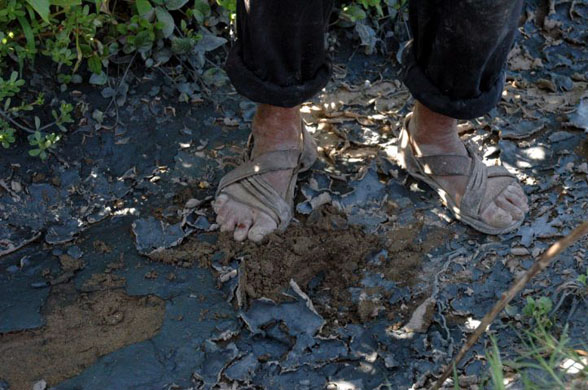
Farmer Mariano Barragan stands on the peeling blue-grey crust left behind on his field. The crust comes from the water he uses to irrigate the land, drawn from a canal allegedly contaminated by the production of distressed jeans. The photo below is from a set of pictures that accompanies this story in the Guardian. I am sorry to say that my blue jeans do have a distressed finish, and yes, they are made in Mexico. Sigh.

Thursday, August 16, 2007

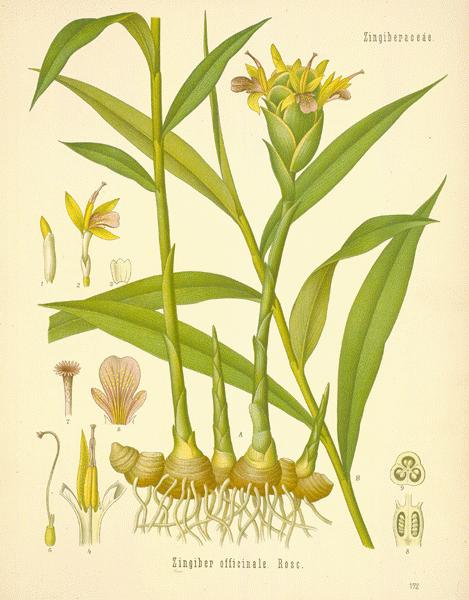
Globalization => no ginger in dinner :-)

From a forum I'm on:
It's been a few years since we have stopped buying our fruits and vegetables at the regular chain grocery stores, and have instead been enjoying fresh locally grown stuff from coop etc. So naturally (pun intended :-) ) we've been immune to what the local grocery chain store peddles as "fresh" vegetables.

I was highly amused when on Sunday evening we were sitting with a few of our friends, and one of them says "Hey, I couldn't find any ginger at the local Giant Eagle store", and another replied, "Yeah, there was some news about some problem with import of ginger from China"! So immediately, I piped up about Nature's Bin, our local foods store where one doesn't need to be worried about imports! :-)

There's our ad for our local coop :-) Maybe someone can make a youtube video!
Hehe! But I guess it's not so funny, after all, that not even the smallest, most ordinary things are consumed close to where they're produced any more. Even in a poor country like India, kerbside fruit vendors have big cardboard boxes of fruit from other countries, and it's not even all upper-crust exotic stuff like kiwi, just regular stuff, year round.

And I wonder, what is life like in the Chinese countryside, with just about anything being cultivated or manufactured for export? Bamboo, wood, paper, plastic, food, fabric... 50 years from now, who will be better off, India or China? The answer is probably Bhutan!

Wednesday, August 8, 2007

Yay caffeine!

Photo source: www.icanhascheezburger.com

I knew it. Coffee had to exist for a noble purpose. From a news report from BBC Online:
Caffeine may help older women ward off mental decline, research suggests. French researchers compared women aged 65 and older who drank more than three cups of coffee per day with those who drank one cup or less per day. Those who drank more caffeine showed less decline in memory tests over a four year period. The study, published in the journal Neurology, raises the possibility that caffeine may even protect against the development of dementia. The results held up even after factors such as education, high blood pressure and disease were taken into account.
The report says confusing things about the interpretations of the study: there seems little agreement on whether coffee prevents dementia or slows it down, and whether other lifestyle factors could be linked to the tea- or coffee-drinking. Looks like the reporter could have done with a shot of espresso, hehe.

Tuesday, July 17, 2007

Get into the garden

Sarah Raven in The Guardian Online
...In the nineteenth century the invention of the refrigerated ship meant that meat could be brought fresh from anywhere in the world. With the endless land available in the Americas and beyond, meat became cheap [in Britain]. The development of factory farming and the efficient networks of the global economy have meant that daily meat has become a reality for everyone. Meat and potatoes have come to dominate our cooking culture, but that is such a sad and reduced place to arrive at, almost fetishistic it seems to me, as if a meal is no good unless it contains a slab of steak or chicken.

It doesn't need to be like that, wasn't in this country before 1850 and isn't like that in most parts of the world. My new garden cookbook is about returning to an older habit, where meat was a regular, delicious, but occasional visitor to the plate. Vegetables can take their place, not as a stand in, or supporting part, but as centre stage, where they belong.

Mediterranean cooking cultures are a wonderful source of inspiration for this way of eating. Traditionally, the relatively high cost of meat in a non-factory dominated environment gives a natural sense of meat's true value. In France and even more in Italy and Spain, you eat meat or fish on high days and holidays, but not for every meal. Allied to that is a far more intimate connection, family by family, to growing things and looking after and slaughtering animals themselves. Meat was and is precious and respected, and so on most days, households inherit, devise, cook and eat delicious things made with grains, vegetables, salads, herbs and fruit.

As a child, we often went on holiday to Asolo in the Veneto, a honey-coloured hill town in the foothills of the Dolomites, with orchards and farmland running up to its medieval walls. All the produce of garden and field were on sale in the market square and under the shady stone arcades that line the streets. Asolo introduced me to the whole Mediterranean philosophy of food, where most small towns would have one butcher, but a bi-weekly market stuffed to the gunnels with beautiful and delicious veg and fruit. Day after day, under the shopping and cooking guidance of the cook in the house where we stayed, we would eat artichokes, salads, wild greens, chicory, sometimes with bread, sometimes with pasta, sometimes with rice, but rarely with meat. That's been a great inspiration for many of my recipes.

Here on the Guardian food blog for the next three weeks, I'll be posting 21 recipes which come out of this non-meat-dominated culture, some of my favourites from my Garden Cookbook.
Click here for first recipe, to post a comment, or to bookmark for remaining 20 recipes

Monday, July 16, 2007

Consuming the environment

In Mumbai, seafood (Konkani, Thai, Chinese, western) is trendy. Even the Taj President has a Konkani restaurant. Such restaurants are open in every season, although the monsoon has, until recent years, been the off-season for seafood in Mumbai. What is all this seafood consumption doing to our fish and prawn populations, and to livelihoods in the long term? (And that is not even considering India's prawn/shrimp exports.)

The article excerpted below, from BBC Online, is about China. Since China and India are often compared in terms of rising incomes, rising consumption and environmental impact, it should be of some relevance to India also.

In the week that China executed [for corruption] the man once responsible for ensuring the safety of China's food and drugs, Fuchsia Dunlop, an expert on Chinese cuisine, finds tainted food has blunted her appetite...
The Chinese economic boom of the last two decades has led to a surge in banqueting, and the boundless appetite of the new Chinese rich for [the sea cucumber] has decimated its stocks in Chinese waters. These days the supplies that grace the dinner table come from as far away as the Galapagos Islands off the South American coast. If I eat one, am I contributing to the ruin of marine ecosystems all over the world?

...Chinese restaurants are the engine driving a global trade in endangered species. And in China, there is a thriving black market in all kinds of supposedly protected animals. I am offered them all the time, even at banquets attended by the very Communist Party and government officials who are meant to be enforcing environmental laws.

...My appetite is also shrinking because of the dire pollution in China. Last autumn I was in Suzhou for the hairy crab season. I revelled in the taste of this fabled delicacy... until I read in the papers that many farmed crabs were tainted with a cancer-causing antibiotic. And then I looked into the waters of one lakeside farm, and saw a swirl of oily scum and other muck.

Earlier this month government inspectors found paraffin wax, formaldehyde and other illegal additives being used in the production of everyday foodstuffs like biscuits and seafood.

...Many mutter darkly about the use of hormones in rearing livestock, and they seek out vegetables that have insect bites on their leaves - a sign that they have not been drenched in pesticides.

On my own trips to China, I eat less and less meat and seafood, because I just do not know what is in them. Instead, I help myself to vegetables and beancurd. But even they might be risky. According to official figures, 10% of Chinese farmland is dangerously contaminated with pollution. And the newspapers are filled with terrifying stories about poisoned rivers, lakes and reservoirs, their waters unfit even for irrigation.

...Beijing itself is said to have tried to cover up a World Bank report revealing that more than 700,000 people die every year in China because of air and water pollution.

China probably has the world's finest cuisine. After more than a decade of researching it, I am still astonished by Chinese culinary culture, and in awe of the skills of the country's chefs. But these days, as I sit down before their beautiful tables of plenty, the shadows of pollution and environmental degradation hover in the background. The banquets that once seemed to be a glorious perk of my job have begun to feel like an occupational hazard.

The meals that give me most pleasure are those in the remote countryside, where I can dine on wild mushrooms and bamboo shoots, and pork from pigs raised by people I know.
Photo: http://www.sallys-place.com/images/food/articles/konkancafe.jpg

Sunday, June 3, 2007

India leaps into the eighteenth century

Photo by J. Adam Huggins, for The New York Times

Article by Somini Sengupta in The New York Times:

Chakubhai Khabhu, old and lean, smoking a thin, hand-rolled cigarette, stands on top of a pile of bricks his children have made with their hands. His daughter, Vanita, 20, tosses bricks to her brothers, two by two, in a seamless human chain. One of his sons’ wives takes a break to breastfeed her 2-year-old near a pile of black clay.

For every thousand bricks, they earn a bit less than $5.50. The family, with five adult laborers, pockets on average a little more than $2 a day.

This is the life behind the great Indian construction boom, propelled by an economy still growing at 9 percent a year.

The lure of steady work is drawing more and more migrants like the Khabhus, who come to brickyards like this one around the country because they can no longer sustain themselves by farming.

The success of the brick business, in other words, is as much a portrait of a growing industry as it is a testament to the dismal state of the Indian peasantry....


Tuesday, May 22, 2007

The foolish Indian middle class

Less than a few kilometres from affluent south Delhi is the sprawling neighbourhood of Sangam Vihar, home to Mukesh, who sells vegetables. He lost half his business in the week that Reliance Fresh opened a supermarket down the street. He has four children and his wife is worried about the future. He doesn't believe he can find other work in Delhi, where even educated people are unemployed. "No, I don't think there's much else to do. If I can't make it here, we just have to go back to our village." Full report.

We're fascinated by refrigeration and airconditioning. We get excited about buying our spinach in supermarkets, branded, suffocated in plastic, labelled "organic" and dated "consume by next week". That way, we believe, we'll know for sure we're getting our money's worth. And it may even be a rupee or two cheaper than our sabziwalla is selling it for.

We're the great Indian middle class. Because we now have dreary outsourcing jobs that pay $1200 a month, we believe we have globalized and arrived. We've invested our life's savings in homes that are not even on the power grid, yet we believe we're smart. We believe we're like the middle class of any other country, and not just because we now wear Gap tees (never mind that cotton jersey feels heavy and stinks in the hot Indian climate, or that we have to hand-wash everything because the generator ran out of diesel mid-way through the rinse cycle), but also because we have begun to resemble our colonizers in ways deeper than the brand-name of the outer husk: we live beyond our means, and we are willing to let peasants die a slow death or simply have our government execute them for resisting.

Oddly enough, little of this might be necessary if only we could recognize the good things about our lives the way they are. The not-so-good things could be resolved with creative local solutions.

The utter lack of refrigeration in storage and transport is the greatest assurance that our "chaotic and unorganized" sabziwallas are selling us truly fresh produce. Not to mention that unrefrigerated produce is more environment-friendly, which reduces other costs in the long run. Are supermarkets the only way to reduce the discomfort and chaos of sabzi shopping? Or perhaps we could ensure home delivery services and designated tree-lined marketplaces in every neighborhood?

For now, here's a taste of the business practices we're so excited to be importing, so that we can become more like our colonizers. BBC reporter Audrey Brown worked undercover at Sainsbury and Tesco, the two leading grocery chains in the UK, and wrote this report. Excerpts are below. The full report is long, but worth reading!

...The benefits are obvious. They are open all hours, offer free parking, have a huge selection and, most importantly, they can be a lot cheaper than the High Street. This is what attracts 16 million customers to Sainsbury's and 20 million to Tesco every week.

...[the] dating system [for merchandise] could easily be changed by staff who would wipe out existing dates and write in other, later dates. It is not illegal to sell food past its sell-by date, but it is store policy at both Sainsbury's and Tesco that once the food has passed that date it should not be sold to customers. Yet, I saw food past its sell-by date on the fresh food counters at both supermarkets...

At Tesco, it was re-packaged and re-labelled with a new date and reduced in price, sometimes days after it should have been sold or removed from the shelves. A lot of the time, the counter staff treated the meat and fish...with indifference...there were times at Tesco when they had no idea what the real sell by date was as they had altered it so many times. Sometimes it was not until the food smelled bad that it was eventually thrown away.

...An ex-supermarket manager told me..."If you want to make food look fresher, you can mix batches....If you take four or five slices of something from one day, you can mix it in with four, five slices of something from the next day."

,,,But I never expected to witness the level of penny-pinching...one employee...at Sainsbury's...cut the end of a brown and drying ham joint so it looked fresher and could be put back on display, thus hopefully be sold to put more pennies in the company's coffers. My boss on the meat counter at Tesco instructed me to use a bin-bag style cover to put over the meat at night, which would have been fine, except he was so intent on saving money that he insisted I use the same one night after night - marked with blood from the food - rather than getting fresh ones.

And all for the sake of saving tiny sums.

During my induction at Sainsbury's, the trainer instructed us to "treat every penny as though it were your own". That sounded fair enough. Nobody wants to waste food unnecessarily.

However, over the course of my investigation I witnessed individuals taking this motto far too literally...Even as a counter assistant, the pressure other staff seemed to feel was almost tangible.

In a bizarre attempt to explain his dates-changes, [one Tesco manager] used the company's commitment to green issues by saying "Tesco doesn't like to throw away anything. That's why we recycle. That meat can be recycled". But I'm not sure a commitment to a green policy quite extends to the unlawful selling of meat.

Tuesday, April 24, 2007

Culinary crimes

I like cooking the old-fashioned way and from scratch, usually for sake of slowness. But I'm very wary of claims to authenticity (in food or anything else, for that matter). For one thing, food doesn't need to be "authentic" to be typical or excellent.

And for another, I think authenticity is a theoretical notion that should be applied very thoughtfully or not at all. South Asia has had chilli peppers for only about as long as Italians have had tomatoes, the Irish, potaotes, and the Belgians / Swiss, chocolate, i.e. five hundred years. That's also about as long as -- perhaps a little longer than -- sugar has been widely used in most parts of the world. If we consider some foods as "authentic", "typical", or even symbolic of a culture today, it's worth also considering that, at some point in the past, they were new-fangled, upper-crust, weird, fashionable, experimental. In India, "chai" has an even shorter history as an item of mass consumption.

Innovation has always happened, and it's not inherently good or bad. Following a recipe precisely in order to be "authentic" suggests a lack of creativity, even though the skill may be evident. It's like a shagird singing exactly the same taan as the guru -- it speaks of poor training, the teacher's tyranny, and the student's lack of imagination and confidence. Besides, I don't think a specific recipe can be "authentic" -- even your grandmother and her sister would not cook the same thing quite the same way. What can be considered authentic or traditional (for want of a better word) though, is the idiom -- the way in which we might adjust, innovate, omit, or substitute. There's some predictability to that, based on the dominant notes we're used to, and the flavors we're exposed to. When someone talks about a cuisine, I think of the idiom. It would not occur to an Indian to add vanilla to chai, because vanilla is just not used in Indian cooking. So adding vanilla and steamed milk to chai is okay if you like that sort of thing, but I think it's misleading (or miseducating an uninformed public) to call it "Indian chai". Oh, and please nobody say "chai tea" unless you would also say "pizza pie", "pita bread", and "jeans pants". "Chai" is tea; no need to say it twice-twice. (Non sequitur: wish I could find the comic strip in which a dis-Oriented new age type was sipping a "Tai Ch'i chai tea latte".)

And misrepresenting others' cuisines appears to be a universal problem: we're guilty, too. I remember being surprised the first time I was served real espresso in India. It was well into my adult life, and the host was Italian. Each guest was asked if he or she would like tea or coffee. I chose coffee. What arrived was even more bitter than it was tiny -- but delicious! Until then, there had been an inexplicable conspiracy, at least in the India I inhabited, to pass off an eight-ounce, frothy, latte-like beverage as both espresso and cappuccino. If real espresso came in eight-ounce cups, many really laid-back Italians I know would be bouncing off the walls.
Photo from blackjava, captioned "Ritzenhoff My Little Darling Nilesh Mistry '03 Espresso Cup"

Wednesday, March 28, 2007

Silly notions about Indian food


Below, I'm excerpting a book review by Veena Parrikar, which recently appeared on my favorite food blog. Her discussion of Indian food in the US struck a chord. I have no idea why so many Indian restaurants in that country feature pink decor, hideous black sequinned tapestries that no restaurant would dare display in India, and most especially, food in which the chef has evidently lost all interest. If they just served the same roti-sabzi-dal-chaawal that the owners and chefs probably eat at home, their fare would probably be far superior to the indistinguishable slop they generally serve up under the banner of Punjabi. Anyhow, I'll let Veena Parrikar do the rest of the talking, since she does it so much better than I:

There are perhaps as many misconceptions about Indian cuisine as there are restaurants named “Bombay Garden”.

• Indian food is tandoori chicken, aloo-matar, saag-paneer, and naan.
• It is hot and spicy.
• Vegetables are cooked to death.
• It starts with frying onions and tomatoes to pulp and ends with a garnish of coriander leaves

One can hardly blame the Western and even some of the Eastern world for harboring these notions. Most Indian restaurants outside India serve the same tired old fare under various guises. The exceptions to these are the upscale “fusion-Indian” restaurants; after all, Indian food cannot be admitted into the Michelin club without a French or “contemporary” accent (pun intended). Over the past few years, South Indian restaurants have slowly gained ground and it is not uncommon to see a Chinese eating masala dosa with her bare hands or a middle-aged white guy slurping rasam at the neighborhood Madras Café or Udupi Palace in the USA. The silly notions about Indian food, however, are far from being a thing of the past. For example, the threat of homogenization, albeit of a different kind, hangs heavy like the odor of yesterday’s takeout. The complexity and variation among and within the cuisines of the four states of Southern India (Karnataka, Kerala, Tamilnadu, and Andhra Pradesh) could never be guessed if one were to go by the menus of these “South Indian” restaurants. Most of them do not stray far from the familiar idli, vada, masala dosa, uttappam, sambar and rasam, with an indifferent nod to some “rice varieties” such as curd rice, lemon rice and tamarind rice. Desserts are still “balls in sugar syrup” (gulab jamun), “ricotta cheese in evaporated milk” (rasmalai), or the occasional rava kesari, leaving in the cold a rich repertoire of jaggery-based sweets that is one of the hallmarks of the cuisines of Southern (and some other states of) India.

To be sure, even within India, availability of the authentic, traditional fare is limited to small niche restaurants, special “festivals” at star hotels, or if you are lucky, at the homes of neighbors and friends from other communities. Your best bet then, is to recreate many of these dishes in your kitchen...

Thursday, February 1, 2007

The Ministry of Food Processing is trying to kill us


This ad appeared in The Times of India edition dated Jan 31, 2007. It's decidedly ugly. It's also unoriginal: the tagline "Processed food mein hai kuchh khaas" (there's something special about processed food) seems inspired by McDonald's tagline "McDonald's mein hai kuchh baat" (there's something special about McDonald's). There's not even a fig-leaf of an attempt to conceal where the message is coming from.

And what is this nonsense about how wonderful processed foods are? If anyone knows how to preserve foods, Indians do. Even my great-great-grandmothers know how to make sun-dried papads and achaars that keep for a year or more. They could stock dried fruit, dehydrated legumes, and six months worth of food grain sealed in giant earthen jars. Their year's supply of spices was ensured by sun-drying and pounding large quantities of ginger, cloves, peppercorns, chilli peppers, turmeric, cumin, and coriander seeds. Their kitchens had stores of rice that had been only husked, or processed into poha, or puffed into kurmura -- all of which are good for you, and which keep for months. They bought chickpeas that were either green, or dried into chana, or further processed into chana dal, or still further into besan. I think they did not have much use for butylated hydroxytoluene (which sounds like an ingredient in a bomb recipe, and not like something to eat) and without the plastic McLitter of Modified Atmosphere Packaging.

Why is Indian taxpayer money propping up an entire ministry for food processing? I say the money is better spent establishing a Ministry for Consuming Food and Water As Close As Possible to Where and When They Occur Naturally.

It seems that attracting investment, especially foreign investment, has become a goal in itself. The government has lost sight of why, and for whom, India needs investment.

Now, if only if those fresh-food-browsing losers would all switch to eating food embalmed with chemicals, mummified in polluting packaging, and far removed from the time and place of its birth, we could realize our fear of hell on earth. And the people over at the ministry for food processing would feel needed.